Biology of the gametocyte: Difference between revisions
From MalariaETC
No edit summary |
No edit summary |
||
| Line 20: | Line 20: | ||
|colspan="1" style = "font-size:100%; color:black; background: gainsboro |'''Morphological features and relevance''' | |colspan="1" style = "font-size:100%; color:black; background: gainsboro |'''Morphological features and relevance''' | ||
|} | |} | ||
</br> | |||
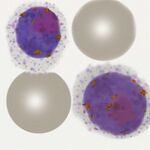
Gametocytes (like schizonts) are the final mature form of parasites in the blood, consequently they have metabolised most or all of the red cell haemoglobin in order to grow. The red cell therefore simply consistes of membrane/cytoskeleton that surrounds the parasite without any of the red haemoglobin pigment generally with prominent malaria pigment (the metabolised haem molecule containing iron). The appearance of gametocytes however does vary according to species and this can aid morphological species identification</br></br> | Gametocytes (like schizonts) are the final mature form of parasites in the blood, consequently they have metabolised most or all of the red cell haemoglobin in order to grow. The red cell therefore simply consistes of membrane/cytoskeleton that surrounds the parasite without any of the red haemoglobin pigment generally with prominent malaria pigment (the metabolised haem molecule containing iron). The appearance of gametocytes however does vary according to species and this can aid morphological species identification</br></br> | ||
''' ''P.falciparum'' ''' In this species the gametocytes have a "rod" shape which may be constricted by the remaining red cell membrane to form a curved shape (often described as banana-shaped). | ''' ''P.falciparum'' ''' In this species the gametocytes have a "rod" shape which may be constricted by the remaining red cell membrane to form a curved shape (often described as banana-shaped). | ||
Revision as of 11:54, 20 March 2025
Navigation
>Main Malaria Index
>>Malaria Biology Index
>>>Gametocyte Biology
Biology of the Gametocyte
|
P.malariae Like other stages in this species the red cell containing the parasite is not enlarged or distorted and may be small. Parasites are typically small and neat with rounded form that do not fill the red cell. P.vivax Typically these are very enlarged (significantly larger than normal red cells) often retaining the irregular shape that devlelops in P.vivax during the trophozoite stage. P.ovale Like other species the gametocytes retain the species-specific features acquired during the late trophozoite phase, they may appear sightly enlarged, often ovoid, and have fimbriation. P.knowlesi These gametocytes tend to be small like P.malariae but less neat and well formed,
|